
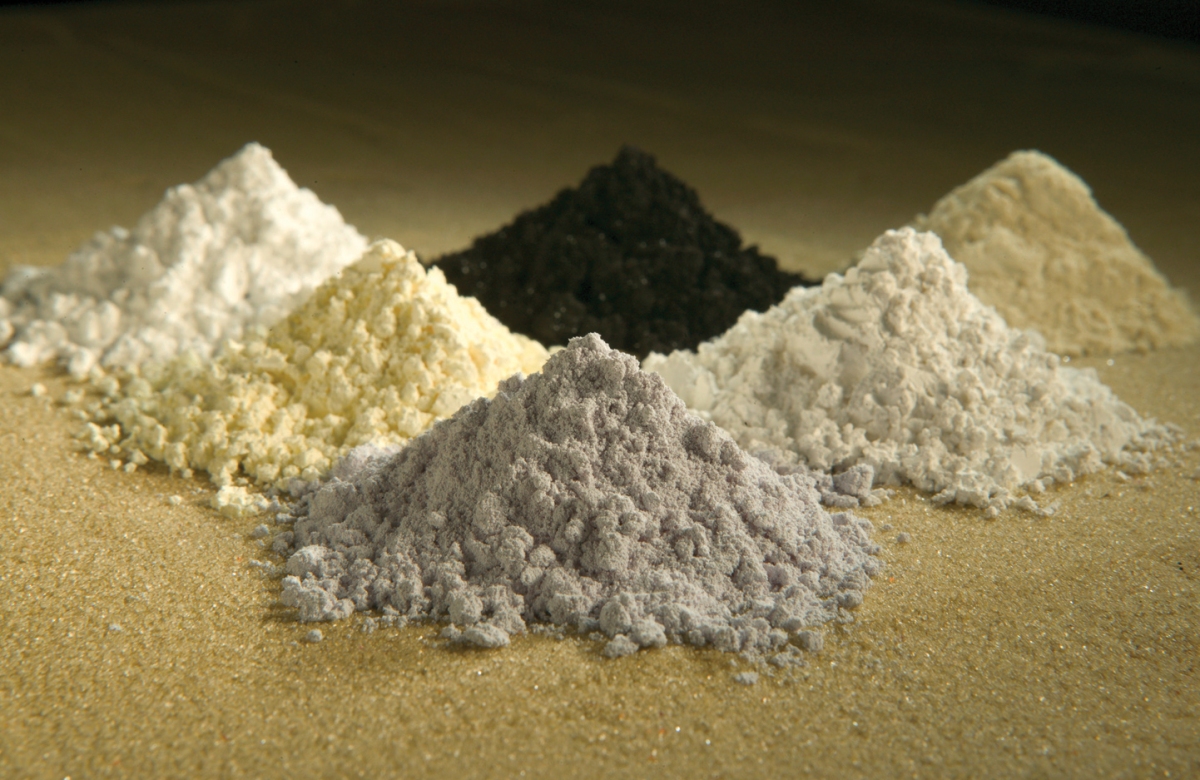
Why the rare earth crisis has almost nothing to do with mines — and what that misreading costs anyone allocating against it
Below The Noise · Issue 003 · June 2026
In April 2025, Beijing placed seven rare earth elements under export licensing. In October it added five more. The headlines that followed were almost uniform in their framing: China controls the world's rare earth deposits, the West is dangerously dependent, and the solution is to find and open new mines. Defence ministries commissioned studies. Junior mining stocks rallied on the word "rare" in their prospectuses.
Nearly all of that framing is wrong in a way that matters. Rare earths are not geologically rare. Cerium is more abundant in the Earth's crust than copper. Neodymium is more common than lead. There are economically viable deposits in Australia, the United States, Brazil, India, Scandinavia, and across Africa. The problem was never finding the ore, and a new mine solves almost nothing.
The monopoly is not in the ground. It is in two steps that happen after the ore leaves it — one a problem of chemistry, the other a problem of radioactivity — and both are far harder to replicate than digging a hole. This is what most of the coverage is missing, and the misreading is expensive: capital is flowing toward the part of the chain that was never the constraint.
The chemistry nobody mentions
The fifteen lanthanides plus yttrium and scandium almost always occur together in the same ore, and they are chemically almost indistinguishable. This is not a casual resemblance. In the aqueous chemistry that dominates industrial separation, the lanthanides are handled predominantly as trivalent cations, and for a given coordination number the difference in ionic radius between the largest, lanthanum, and the smallest, lutetium, is only about 0.17 ångström. Adjacent elements differ by a few thousandths of a nanometre. (There are redox exceptions — cerium will oxidise to Ce(IV), europium and a few others can be driven to the divalent state — and those exceptions are precisely the handful of cases where separation becomes easier.)
That near-identity is a consequence of the lanthanide contraction — the gradual shrinking of the ionic radius across the series as electrons fill the inner 4f shell while the outer chemistry stays essentially constant. It is a clean piece of physics, and it is also the entire commercial problem. Because adjacent lanthanides behave almost identically in solution, separating them into the single-element, high-purity oxides that industry actually needs is one of the hardest routine separations in industrial chemistry.
The standard method is liquid-liquid solvent extraction. An acidic aqueous solution of mixed rare earths is contacted with an organic solvent carrying an extractant — historically an organophosphorus compound such as PC88A or D2EHPA — that has a very slightly higher affinity for one element than its neighbour. "Very slightly" is the operative phrase. For adjacent pairs such as neodymium and praseodymium, the separation factor is close to unity — typically around 1.2 to 1.5, depending on the extractant and conditions.
A separation factor this close to one means each contact stage barely shifts the ratio. To get from mixed concentrate to 99.9% pure single elements, you cascade the process: a full separation plant may run hundreds of stages of mixing, settling, extraction and stripping to isolate the individual elements, consuming large volumes of strong acids and organic solvents and generating toxic waste that has to be managed.
This is the first thing the mining framing obscures. The bottleneck is not the mine; it is the refinery, and the refinery is a sprawling, capital-intensive, chemically delicate cascade that takes years to commission and tune. Several Western ventures have demonstrated bench-scale separation, but as of mid-2025 none had operated a true commercial-scale separation refinery for all fifteen lanthanides outside the established players. A mine without a separation plant produces a mixed concentrate that, in practice, still has to be sent to China to become usable material.
The part that is actually radioactive
There is a second barrier, and it is the one that explains why the West had this capability and walked away from it. It is rarely mentioned in the geopolitical coverage, which tends to treat the loss of Western processing as a story about cheap Chinese labour or lax environmental standards. The deeper reason is in the ore itself.
The principal rare-earth minerals are not chemically clean carriers. Monazite and xenotime are phosphates; bastnäsite is a fluorocarbonate. Monazite in particular commonly carries several percent thorium oxide — reported values often run around 4.5 to 9.5% ThO₂, and higher in some concentrates, the exact figure being deposit-specific. Thorium is radioactive. So, in many deposits, is the associated uranium. The moment you crack the ore to get at the rare earths, you have a radiological waste stream to manage.
The numbers are concrete. Mountain Pass in California — the only rare earth mine and processing facility in the United States — works an ore of about 0.02% thorium and 7.6% rare earths, which generates roughly 2.6 kg of thorium for every tonne of rare earths produced, with 96 to 98% of that thorium rejected into solid waste that must be handled under strict regulation. In China's main processing hub the scale is industrial: the Baotou tailings impoundment — a lake of radioactive and toxic sludge covering several square kilometres near the Yellow River — concentrates thorium well above background, with in-situ gamma surveys reporting thorium-232 at around 320 mg/kg, roughly thirty times typical crustal abundance.
This is where regulatory thresholds bite. Under the US Nuclear Regulatory Commission, "source material" includes uranium and thorium in any form, and ores or materials containing 0.05% or more of either by weight meet the statutory definition. Depending on concentration, chemical form and waste pathway, that can pull parts of a separation flowsheet into source-material licensing, monitoring, disposal and liability regimes — a regulatory burden Chinese processors have historically not carried in the same way.
The clearest illustration is historical, and under-cited in the current debate. Between 1980 and 1995, around 160,000 tonnes of monazite were mined in Western Australia and shipped to France for rare earth processing — until the French plant was closed because its operators could not dispose of the radioactive waste. The West did not lose rare earth processing for lack of chemistry. It had the chemistry. Cheap labour, industrial policy and price competition all played their part — but a decisive factor was that the environmental and radiological cost became commercially and politically unacceptable in the West, and acceptable, for a time, in China. That trade is not reversed by opening a mine.
What China actually built
Put the two barriers together and the real nature of the monopoly comes into focus. China's dominance is not a resource position. For the magnet rare earths — neodymium, praseodymium, dysprosium and terbium — China accounted for around 60% of global mining output in 2024, a strong share but not a stranglehold; Myanmar, Australia and the United States make up much of the rest.
The chokehold is downstream. China controls around 91% of global rare earth refining capacity and produced roughly 94% of the world's sintered permanent magnets in 2024 — the separation cascades and the metallurgy that turn mixed concentrate into the purified oxides, metals and alloys that go into magnets. That overwhelming share of finished-magnet output supplies the components for vehicles, industrial motors, aircraft, military systems, data centres and wind turbines worldwide. The leverage is in the conversion, not the extraction.
Seen this way, China's position is the cumulative result of three decades of doing the part everyone else found too difficult, too dirty, and too radioactive to be worth the margin. It is an industrial moat built out of separation know-how, installed cascade capacity, metallurgical skill, and a national willingness to carry the radiological externality. None of those is quick to replicate, and a junior miner's drill results address none of them.
Why this became urgent now
The reason this stopped being a structural footnote and became a live risk is a sequence of policy moves over the past year, and the detail of the timeline matters because it defines the window.
On 9 October 2025, China introduced its most comprehensive restrictions to date, modelled explicitly on the US Foreign Direct Product Rule: any foreign-made product containing 0.1% or more of Chinese-origin rare earths, or made using Chinese processing technology, would require a licence — extending Chinese regulatory reach across global supply chains for the first time. Both sides then stepped back at the Busan APEC summit at the end of October 2025, and within days formalised a mutual stand-down: China suspended the 9 October measures until November 2026.
The suspension is relief, not resolution. The second wave of controls is suspended only until 10 November 2026, and the architecture behind it has if anything deepened. On 1 January 2026 an updated licensing catalogue codified and extended the administrative treatment of controlled rare-earth compounds — including materials linked to samarium, gadolinium and lutetium, which were already covered by the April 2025 controls rather than newly added — while the extraterritorial October measures remained deferred. On 31 March 2026, State Council Order No. 834 created China's first dedicated supply-chain security framework, a formal monitoring-and-response mechanism spanning export controls, countermeasures, data security and investment screening. The regime is being built out during the very pause meant to be reassuring.
The exposure this leaves is not evenly distributed. European Central Bank economists have estimated that over 80% of large European firms are no more than three intermediaries away from a Chinese rare earth producer, and rare earths have appeared on every one of the EU's five critical raw materials lists since 2014, shortlisted as both indispensable and at high risk of supply disruption. The relevant question for anyone with exposure is not whether the current détente holds, but what happens at the next inflection — and the calendar gives a date.
The investment misread, stated plainly
If the monopoly is in separation and metallurgy rather than in ore, then the dominant investment response is aimed at the wrong layer. Capital chasing mining claims is buying exposure to the one part of the chain that was never genuinely scarce. A new deposit, absent a separation and metallurgical pathway that does not route back through China, produces a concentrate that deepens rather than relieves the dependency.
The layer that matters — and the one that is genuinely hard to stand up — is separation capacity, metal and alloy production, and magnet manufacturing located outside Chinese jurisdiction. That is where the scarcity actually sits, where the multi-year commissioning timelines apply, and where the radiological permitting problem has to be solved rather than wished away. It is also where any durable repricing should concentrate, because it is the layer that cannot be conjured quickly even with abundant capital and political will.
Two qualifications keep this honest. First, the separation problem is not frozen. Researchers are actively pursuing alternatives to conventional solvent extraction — biomimetic ion-selective membranes, electrokinetic separation, ionic liquids — aimed at cutting the stage count and chemical consumption, and there has been genuine progress on more selective extractant ligands. But these approaches still require substantial development before they can scale to the cost and reliability industry demands. They change the five-to-fifteen-year picture, not the next two years.
Second, the timeline for an independent supply chain is long and should not be understated. Estimates for rebuilding fully independent processing capacity range widely — some run to two or three decades — and the high end comes largely from advocacy sources, so it should be treated as contestable. But even the optimistic readings, anchored in the multi-year commissioning times that bodies such as the IEA and CSIS describe, run to the better part of a decade. The asymmetry — a dependency that took thirty years to build and cannot be unwound in two — is the structural fact underneath the headlines.
What to actually watch
The signal worth tracking is not the price of any single oxide, which is volatile and easily distorted by stockpiling and licensing noise. It is three slower variables: whether non-Chinese separation and magnet capacity actually commissions and reaches commercial output rather than announcement; whether any Western or allied jurisdiction resolves the radiological-permitting question for processing at scale, which is the quiet precondition for everything else; and what China does as the November 2026 suspension approaches. The first two move on the timescale of years and are visible long before they matter. The third has a date on it.
The mistake to avoid is the one the coverage is making: treating a chemistry-and-radioactivity problem as a geology problem, and pricing the mine instead of the refinery. The ore was never the scarce thing. The willingness and the capability to turn it into a magnet — cleanly, legally, and outside one country's licensing authority — is.
Signals
Allied processing capacity is moving from announcement to commissioning. The clearest shift of the past two months is that Western strategy has stopped being about mines and started being about separation. A Japan–France roadmap is tied to the Caremag refining project in France, expected to start late in 2026 and aimed at the heavy rare earths — dysprosium and terbium — that are the genuine chokepoint. In parallel, Lynas has announced a metal-making facility in Vietnam for NdPr and heavy-rare-earth products; reporting has linked it to downstream magnet manufacturing in the United States, though Lynas's own statement stops short of confirming that detail. Either way, this is the layer the main piece argues actually matters, finally attracting capital.
The state is rewriting the market structure. On 2 February 2026 the US Export-Import Bank, with the White House, announced "Project Vault" — the US Strategic Critical Minerals Reserve — backed by an EXIM loan of up to $10 billion and nearly $2 billion in private capital, the largest financing commitment in the bank's history. Read it alongside the price-floor mechanism in the recent government supply deals: NdPr oxide has recently traded around — and at times above — the roughly US$110/kg floor, which means the mechanism works less as a permanent subsidy than as downside insurance when prices weaken. The signal is structural: rare earths are being pulled out of free-market commodity pricing and into managed strategic allocation. That floor is precisely the protection whose absence bankrupted Molycorp in 2015.
The valuation premium is going to heavy-rare-earth separation, not ore. As of December 2025, Lynas was the only producer of separated dysprosium and terbium outside China, and its shares had risen around 170% over the preceding twelve months ahead of the March 2026 supply agreement. The market is paying for separation capability, not deposits — confirmation, in price, of where the scarcity sits.
The magnet layer remains the slowest to arrive. Neo opened Europe's first mass-production magnet facility in Estonia, but MP Materials' large-scale "10X" magnet build-out is not expected to yield first commercial product until 2028. Even with capital and political will aligned, the final, most value-dense step still runs years out — the temporal asymmetry the main piece describes, visible in the build schedules.st mass-production magnet facility in Estonia, but MP Materials' large-scale "10X" magnet build-out is not expected to yield first commercial product until 2028. Even with capital and political will aligned, the final, most value-dense step still runs years out — the temporal asymmetry the main piece describes, visible in the build schedules.
Further reading
Rudnick, R. L. & Gao, S. (2014). Composition of the Continental Crust. In Treatise on Geochemistry, 2nd ed., vol. 4, 1–51. Elsevier. https://doi.org/10.1016/B978-0-08-095975-7.00301-6
U.S. Geological Survey (2025). Mineral Commodity Summaries 2025: Rare Earths. https://doi.org/10.3133/mcs2025
Shannon, R. D. (1976). Revised effective ionic radii and systematic studies of interatomic distances in halides and chalcogenides. Acta Crystallographica A, 32(5), 751–767. https://doi.org/10.1107/S0567739476001551
Xie, F., Zhang, T. A., Dreisinger, D. & Doyle, F. (2014). A critical review on solvent extraction of rare earths from aqueous solutions. Minerals Engineering, 56, 10–28. https://doi.org/10.1016/j.mineng.2013.10.021
Ault, T., Krahn, S. & Croff, A. (2015). Radiological Impacts and Regulation of Rare Earth Elements in Non-Nuclear Energy Production. Energies, 8(3), 2066–2081. https://doi.org/10.3390/en8032066
Fate and Environmental Impact of Thorium Residues During Rare Earth Processing (2016). Journal of Sustainable Metallurgy, 2, 365–377. https://doi.org/10.1007/s40831-016-0083-3
Li, R. et al. (2014). Distribution of thorium in soils surrounding the rare-earth tailings reservoir in Baotou, China. Journal of Radioanalytical and Nuclear Chemistry, 299, 1453–1459. https://doi.org/10.1007/s10967-013-2814-2
Li, B. et al. (2016). In-situ gamma-ray survey of rare-earth tailings dams — a case study in Baotou and Bayan Obo Districts, China. Journal of Environmental Radioactivity, 151, 304–310. https://doi.org/10.1016/j.jenvrad.2015.10.027
U.S. NRC — Atomic Energy Act / 10 CFR Part 40: "source material" inclui urânio e tório em qualquer forma; limiar de 0,05% em peso. https://www.nrc.gov/reading-rm/doc-collections/cfr/part040/
World Nuclear Association (2025). Mineral Sands (apêndice NORM). https://world-nuclear.org/information-library/appendices/mineral-sands-appendix-to-norm-information-paper
World Nuclear Association (2026). Uranium from Rare Earth Deposits. https://world-nuclear.org/information-library/nuclear-fuel-cycle/uranium-resources/uranium-from-rare-earths-deposits
IEA (2025). Rare Earth Elements — Executive summary. https://www.iea.org/reports/rare-earth-elements/executive-summary
IEA (2025). Global Critical Minerals Outlook 2025. https://www.iea.org/reports/global-critical-minerals-outlook-2025
Banco Central Europeu (2025). How vulnerable is the euro area to restrictions on Chinese rare earth exports? ECB Economic Bulletin, Issue 6/2025. https://www.ecb.europa.eu/press/economic-bulletin/focus/2025/html/ecb.ebbox202506_01~44d432008e.en.html
European Parliament / EPRS (2025). China's rare-earth export restrictions. https://epthinktank.eu/2025/11/24/chinas-rare-earth-export-restrictions/
State Council of the PRC, Order No. 834 — Provisions on the Security of Industrial and Supply Chains (adoptado 13 de Março de 2026; promulgado e em vigor a 31 de Março de 2026). Análise: Squire Patton Boggs, https://www.squirepattonboggs.com/insights/publications/china-s-new-supply-chain-security-regime/ ; White & Case, https://www.whitecase.com/insight-alert/china-issues-new-supply-chain-security-regulations
CSIS (2025). Developing Rare Earth Processing Hubs: An Analytical Approach. https://www.csis.org/analysis/developing-rare-earth-processing-hubs-analytical-approach
Center on Global Energy Policy, Columbia SIPA (2026). Análises sobre o "Project Vault" / US Strategic Critical Minerals Reserve e MP Materials. https://www.energypolicy.columbia.edu/mp-materials-deal-marks-a-significant-shift-in-us-rare-earths-policy/
InvestorNews (2026). Critical Minerals Report 04.05.2026. https://investornews.com/market-opinion/critical-minerals-report-04-05-2026-section-232-reset-begins-tungsten-capital-accelerates-rare-earth-supply-chains-face-execution-test/
SFA (Oxford) (2025). Pentagon and MP Materials Forge U.S. REE Independence. https://www.sfa-oxford.com/market-news-and-insights/sfa-pentagon-and-mp-materials-forge-u-s-ree-independence/
Rare Earth Exchanges (2026). Rare Earth & Magnet Industry Updates (Jan 5–10, 2026). https://rareearthexchanges.com/news/rare-earth-magnet-industry-updates-jan-5-10-2026/
Image credits: Peggy Greb, US Department of Agriculture
Below The Noise is an independent publication translating frontier scientific developments into strategic intelligence for investors and decision-makers in high-complexity sectors. No sponsored content. No affiliate links. Primary sources throughout.